Ideas for a better investment
Bidding on Mortgage Notes: Strategies Explained
Discover essential bidding strategies for mortgage notes. Learn the importance of UPB & FMV, & avoid common pitfalls in real estate investing.

6 min read
This blog post is based on the Paperstac Podcast episode titled, Purchasing Mortgage Notes (Bidding Strategies).
In this blog post we dive into the intricacies of bidding on mortgage notes, focusing on key strategies that can guide you in making informed decisions. Whether you’re an experienced investor or just starting out, understanding how to evaluate and bid on mortgage notes is crucial for success in the real estate investing world.

What is UPB and FMV?
Before we delve into the bidding strategies, let’s clarify two important terms: Unpaid Principal Balance (UPB) and Fair Market Value (FMV). UPB refers to the amount of money that remains unpaid on a loan, while FMV is the estimated price that a property would sell for on the open market. These terms are essential in determining how to approach your bids.
Bidding on Mortgage Notes Based on UPB
Most investors often look at UPB when placing their bids. However, this approach can be limiting as it focuses primarily on the amount owed rather than the actual value of the asset. While bidding on UPB can sometimes yield favorable results, it’s essential to understand the context of the property and the market conditions.
For instance, if the UPB of a property is $250,000 but the actual value of the house is only $150,000, bidding based on UPB could lead to significant losses. In such a scenario, a more prudent strategy would involve assessing the property’s value and considering potential foreclosure costs, holding costs, and repair costs.

Bidding on Mortgage Notes Based on FMV
On the other hand, bidding based on FMV allows investors to consider the current market conditions and the property’s true worth. This method encourages a more strategic approach to bidding and can lead to better investment outcomes. If you know that the property’s FMV is higher than the UPB, it may be worth placing a bid that reflects that value.
For example, if a property has a UPB of $240,000 but an FMV of $330,000, bidding based on FMV could allow you to secure the property at a lower price while still maintaining a profitable investment strategy.

Evaluating Different Bidding Strategies with Mortgage Notes
In our discussion, we explored various bidding strategies and their implications. Here are some key takeaways:
- Understanding Market Conditions: The real estate market’s dynamics play a crucial role in your bidding strategy. For example, if there are many assets available, you might be able to bid at a lower percentage of the UPB.
- Consider the Type of Asset: Is the asset performing or non-performing? This distinction can significantly impact your bidding approach.
Types of Notes
Below is a comparison chart of three different types of notes you can come across when bidding on mortgage notes.

- Know Your Exit Strategies: Before placing a bid, it’s essential to have a clear understanding of your exit strategies. Are you planning to hold the asset long-term or flip it quickly? Your strategy will dictate your bidding approach.

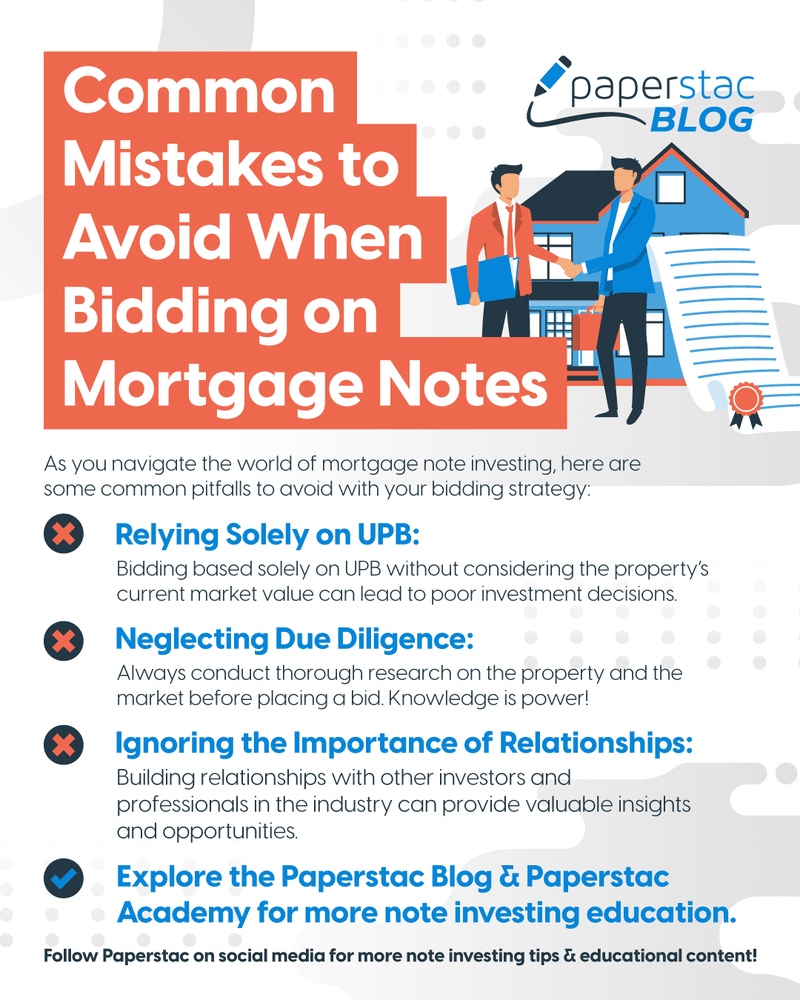
Common Mistakes to Avoid
As you navigate the world of mortgage note investing, here are some common pitfalls to avoid:
- Relying Solely on UPB: Bidding based solely on UPB without considering the property’s current market value can lead to poor investment decisions.
- Neglecting Due Diligence: Always conduct thorough research on the property and the market before placing a bid. Knowledge is power!
- Ignoring the Importance of Relationships: Building relationships with other investors and professionals in the industry can provide valuable insights and opportunities.

Real Estate Market Trends
The real estate market has experienced significant fluctuations over the past few years. Understanding these trends is vital for making informed bidding decisions. For instance, the current market conditions may lead to a scarcity of available properties, driving prices up. Being aware of such trends can help you determine whether to bid aggressively or hold back.

Additionally, consider the impact of external factors such as interest rates and economic conditions on the real estate market. These factors can influence property values and, consequently, your bidding strategy.

Leveraging Technology
In today’s digital age, technology plays a pivotal role in real estate and note investing. Platforms like Paperstac offer tools that can streamline the bidding process and provide access to vital market data. By leveraging these technologies, you can enhance your bidding strategies and make more informed decisions.

Conclusion
In conclusion, understanding the nuances of bidding on mortgage notes is essential for any investor looking to navigate the real estate market successfully. By considering both UPB and FMV, evaluating different bidding strategies, and leveraging technology, you can position yourself for success in this dynamic field.
Remember, there is no one-size-fits-all approach to bidding. It’s about understanding your investment criteria, market conditions, and the unique characteristics of each asset. With practice and continuous learning, you can refine your bidding strategies and achieve your investment goals.

FAQ
What is the best strategy for bidding on mortgage notes?
The best strategy depends on your investment goals. Consider both UPB and FMV, and evaluate the market conditions before placing a bid.
How do I determine the FMV of a property?
You can determine FMV by researching recent sales of similar properties in the area, consulting real estate professionals, and using online valuation tools.
Is it better to bid on performing or non-performing notes?
It depends on your investment strategy. Performing notes may provide steady income, while non-performing notes can offer higher potential returns but come with more risk.
Where can I learn more about mortgage note investing?
For more insights, check out the Paperstac YouTube channel, where we provide valuable tips and strategies for mortgage note and real estate investing: Paperstac – YouTube.
How can I keep up with real estate market trends?
Stay informed by reading industry news, following note investing and real estate blogs, and participating in local real estate note investment groups.
We hope you found these insights helpful. Don’t forget to check out more content from the Paperstac blog and subscribe to the Paperstac YouTube channel for more valuable content on mortgage note investing and real estate strategies.
Thank You For Reading
We hope you enjoyed reading this article from the Paperstac Blog! Don’t hesitate to contact jessica@paperstac.com with any mortgage note industry topics or collaboration inquiries you want us to cover on the Paperstac blog.
Ready to embark on your note investment journey?
Visit Paperstac to explore these strategies and take your first steps toward financial success!

Paperstac
We invite you to visit our website to gain a deeper understanding of our platform, its features, and the incredible team behind it and to explore how it can benefit you.
For more information about us, please visit our website: https://paperstac.com/about.
Share This Article
Don’t forget to share this article on your favorite social media platforms and with others you feel can benefit from it.