
Ideas for a better investment
Deed of Trust vs Mortgage
Understand the important differences in a real estate transaction between a deed of trust vs mortgage to help you in note investing.

13 min read
When it comes to real estate transactions and securing loans, two common terms that often arise are “Deed of Trust” and “Mortgage.” Some states require a deed of trust, while others insist on a mortgage. So, when comparing a deed of trust vs mortgage, it’s important to understand their differences.
These legal instruments serve as a way to provide security for lenders while borrowers obtain financing for their property purchases. Although both deed of trust and mortgage achieve a similar goal, there are distinct differences between them.
Deed of Trust vs Mortgage: An Introduction
While your state dictates whether you need a deed of trust or a mortgage, it is crucial to understand the differences between these two instruments. These differences include the number of parties involved, who holds the title, and the foreclosure process. Let’s delve deeper into these aspects to gain a better understanding of the distinctions between a deed of trust and a mortgage.
Let’s begin by exploring what a deed of trust is and how it works.
What Is A Deed of Trust?
A Deed of Trust is an agreement used in many states as a security instrument for a loan, serving as an alternative to a mortgage. In this arrangement, the borrower transfers legal title to a trustee who holds the property in trust as security for the repayment of the debt.
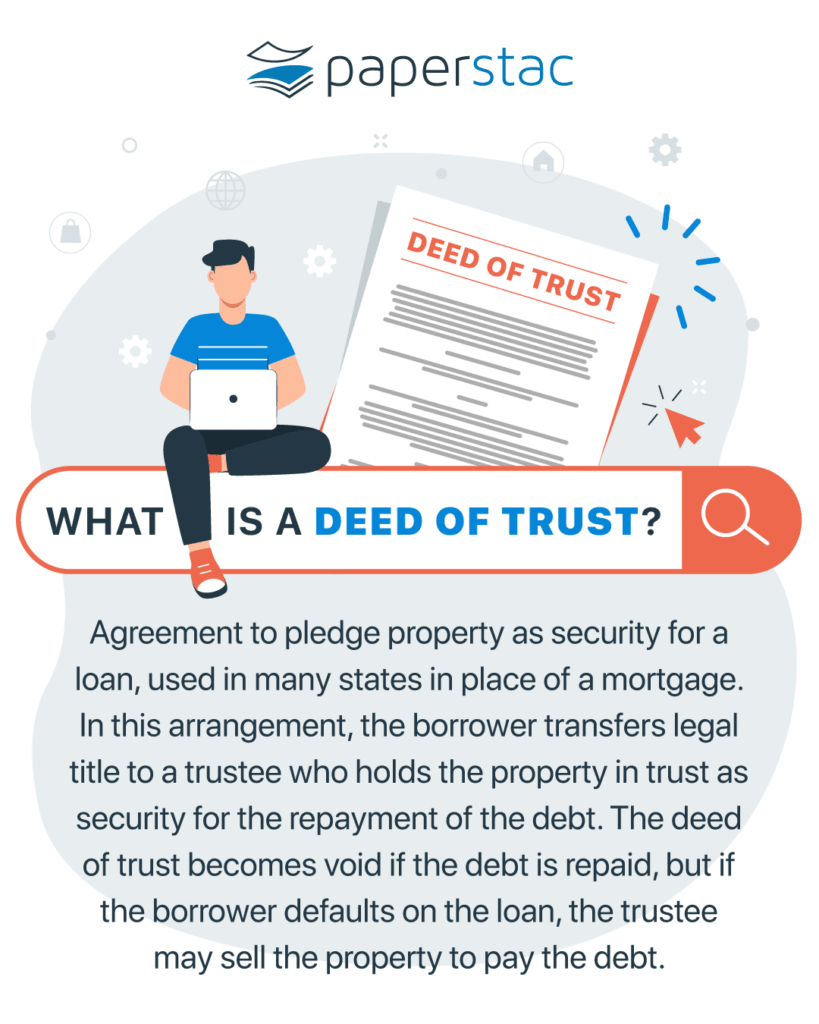 A Deed of Trust is an agreement to pledge property as security for a loan, used in many states in place of a mortgage.
How does a deed of trust work?
Deeds of Trust work in a simple manner: a lender gives money to a borrower for a home purchase. In exchange, the lender receives a promissory note that guarantees the borrower will repay the loan amount. A Trustee holds the title during the loan period. The deed of trust becomes void if the debt is repaid, but if the borrower defaults on the loan, the trustee may sell the property to pay the debt.
What Is A Mortgage?
A mortgage is a loan secured by physical property that allows a borrower to finance the purchase of a home.
When purchasing a home, land, or other piece of real estate, a mortgage secures or collateralizes the property against a loan. Allowing a borrower to finance the purchase of a home. Furthermore, it serves as security for the debt specified in the promissory note in the event of a borrower’s default.
This does occur on occasion. To make up for the loss, the lender may seize and sell the property asset. In other words, the mortgage gives the lender the right to sell your home through a process known as “foreclosure.” In general, asset collateralization provides lenders with adequate protection against default risk.
What Kind of Information Does a Mortgage Contain?
The mortgage document contains several key pieces of information, including:
- Parties Involved: The names and contact information of the borrower (mortgagor) and the lender (mortgagee).
- Property Description: A detailed description of the property being purchased. This includes the address, legal description, and any relevant details about the property’s boundaries or features.
- Repayment Terms: The terms and conditions regarding the repayment of the loan, including the length of the loan (loan term) and the frequency of payments (monthly, bi-weekly, etc.).
- Amortization Schedule: This outlines the repayment plan, indicating the amount of each payment. How much goes towards the principal (the original loan amount), and how much goes towards the interest.
- Default and Foreclosure: The conditions under which the loan is considered in default. Such as, failure to make payments, and the lender’s rights in the event of default, including the possibility of foreclosure.
- Prepayment and Penalties: Any provisions regarding prepayment of the loan or penalties for early repayment. Some mortgages may impose fees or penalties if the borrower pays off the loan before the agreed-upon term.
- Mortgage Insurance: If required, details about mortgage insurance, which protects the lender in case the borrower defaults on the loan. This section specifies the conditions and costs associated with such insurance.
- Other Clauses: Various additional clauses may be included in the mortgage. Such as provisions for escrow accounts to cover property taxes and insurance. Procedures for refinancing, and other specific terms agreed upon by the borrower and lender.
Information Can Vary Depending on Jurisdiction & Lender’s Policies
It’s important to note that the specific content and format of a mortgage document may vary depending on the jurisdiction and the lender’s policies. The information provided here is a general overview of what you can typically find in a mortgage agreement.
It is also important to remember that when purchasing a loan, you must have the original note with you. They are occasionally destroyed, and a lost note affidavit can be found in place of it.
Deed of Trust vs Mortgage
Both of these legal documents serve the same purpose. A deed of trust and a mortgage both give the lender the right to repossess the borrower’s home through foreclosure if the borrower fails to make payments. With both, the security instrument is released once the borrower fully repays their debt.
There are, however, some significant differences.
Key Differences Between A Deed of Trust vs Mortgage:
Now that we have a basic understanding of both terms, let’s explore the key differences between a deed of trust and a mortgage:
Key Differences:
- Parties Involved: As mentioned earlier, a deed of trust involves three parties (borrower, lender, and trustee), whereas a mortgage involves only two parties (borrower and lender).
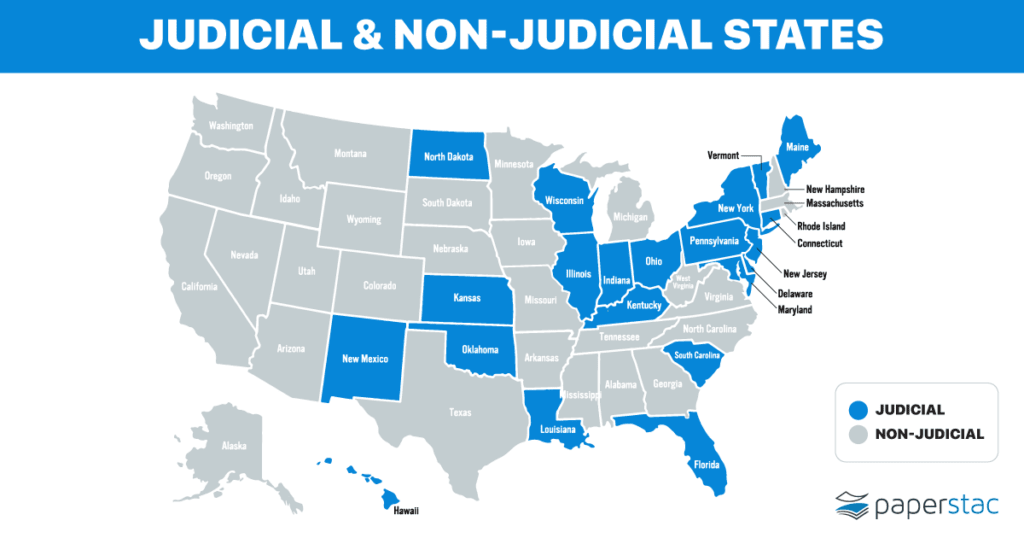
- Foreclosure Process: In the event of default, a deed of trust allows for non-judicial foreclosure, which means the lender can initiate foreclosure without court involvement. In contrast, a mortgage usually requires a judicial foreclosure process, which involves going to court to obtain a foreclosure order.
- Title Ownership: In a deed of trust, the trustee holds legal title to the property until the loan is fully repaid. In a mortgage, the borrower retains legal title to the property, but the lender holds a lien against it.
- Flexibility: Deeds of trust are generally more flexible than mortgages. They allow for easier transfer of ownership and substitution of trustees without requiring court approval.
Deed of Trust vs Mortgage Comparison Chart
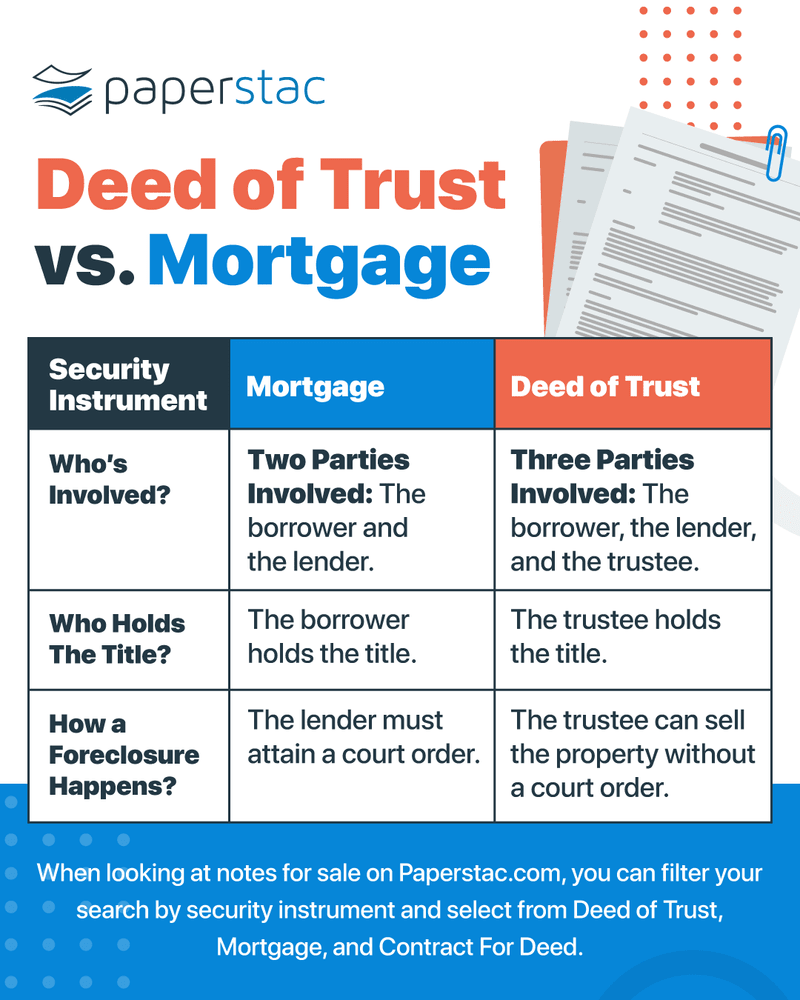
Deed of Trust vs Mortgage: Who’s Involved?
A mortgage only involves two parties: the borrower and the lender. A deed of trust adds an additional party, a trustee, who holds the home’s title until the debt is paid off and loan is repaid.
Key Takeaway:
Deed of Trust Parties Involved:
- The Buyer (Borrower)
- The Seller (Lender)
- The Trustee (third party that holds the title until debt is paid off)
Who Holds The Title?
The third party or trustee holds the legal title with a deed of trust, whereas the borrower gives legal title directly to the lender with a mortgage.
When a Deed of Trust is closed, the borrower receives the property’s equitable title (the right to obtain full ownership of the property), while the legal title is transferred to a third party trustee.
Essentially, the Trustee (whom the lender appoints, usually a title company or attorney) is empowered to step in and handle the foreclosure process if the borrower ever falls behind on their payments.
Key Takeaway:
- Deed of Trust: The trustee holds the title.
- Mortgage: The borrower holds the title.
State-Specific Variations
Mortgage and deed of trust laws vary by state. Some states predominantly use mortgages, while others favor deeds of trust. It is essential to understand the laws and regulations in your specific jurisdiction to ensure compliance with local practices.Additionally, the use of a mortgage or a deed of trust may impact the foreclosure process and the rights and responsibilities of the parties involved. Consulting with a qualified attorney or real estate professional can provide valuable insights tailored to your specific circumstances.
How a Foreclosure Happens?
Both a deed of trust and mortgage allow the lender to foreclose if the borrower fails to make payments, but the process for doing so is different. Each type of security instrument leads to a different type of foreclosure process.
Deed of Trust Foreclosure
Deed of trust states typically have a non-judicial foreclosure process. Court is not required for a deed of trust foreclosure. If the borrower defaults, the lender can foreclose without a judge’s approval by showing proof of default to the trustee. The trustee can sell the property without a court order with a deed of trust.
To clarify, the trustee has no control or rights over the borrower’s property, and the arrangement is similar to a mortgage in most ways. However, if the borrower defaults, the lender can foreclose without the approval of a judge by presenting proof of default to the trustee.
Mortgage Foreclosure
With a mortgage, the lender must obtain a court order in order to foreclose on a home. This is referred to as judicial foreclosure and can be a lengthy and costly process for both the borrower and the lender.
Remember, the state’s laws will determine which option is used and which type of foreclosure process lenders are required to follow. You can find out which option is used by checking the closing statement.
How a Deed of Trust Can Benefit the Lender?
A deed of trust can benefit the lender by allowing for a quicker foreclosure on a home. Most trust deeds include a “non-judicial foreclosure” clause, which means the lender will not have to wait for the court system to review and approve the foreclosure process.
This action significantly reduces the time and cost of foreclosures.
Benefits for the Lender with a Deed of Trust:
- Security Interest: The deed of trust provides the lender with a legal claim on the property as collateral, reducing the risk associated with lending a significant amount of money. If the borrower defaults, the lender can foreclose on the property and recover the outstanding debt.
- Priority of Repayment: The lender’s position as the beneficiary of the deed of trust establishes their priority of repayment, which increases the likelihood of recovering the loan amount ahead of other creditors in case of borrower default or property sale.
- Quicker Recovery of Funds: The power of sale provision in the deed of trust allows the lender to initiate a foreclosure process without court involvement in certain jurisdictions. This streamlined process can lead to a quicker recovery of funds compared to a traditional judicial foreclosure.
- Reduced Risk: With a deed of trust in place, lenders have a tangible asset (the property) that can be sold to recoup their investment in case of borrower default. This reduced risk can positively impact the lender’s overall portfolio and ability to offer competitive loan terms.
- Legal Documentation: The deed of trust serves as a legally binding document that clearly outlines the terms and conditions of the loan, ensuring transparency, minimizing disputes, and providing a legal framework for both parties involved.
How a Deed of Trust Can Benefit the Borrower?
Benefits for the Borrower with Deed of Trust:
- Access to Financing: A deed of trust enables the borrower to obtain financing for a real estate purchase, allowing them to acquire a property without having to pay the full purchase price upfront.
- Lower Interest Rates: By securing the loan with a deed of trust, the borrower may be able to secure more favorable interest rates compared to unsecured loans or other types of financing.
- Flexible Repayment Terms: Borrowers can negotiate repayment terms, including the loan duration and the installment amounts, to suit their financial capabilities and preferences.
- Improved Credit Profile: Timely payments on a mortgage secured by a deed of trust can help the borrower establish and build a positive credit history, potentially improving their creditworthiness for future financial transactions.
- Potential Tax Benefits: Depending on the jurisdiction, borrowers may be eligible for tax deductions on mortgage interest payments, providing potential tax benefits.
Similarities Between Mortgage & Deed of Trust
Security For The Lender:
- Both mortgage and deed of trust are legal agreements that allow a borrower to secure a loan for the purchase of real estate. They provide security for the lender by placing a lien on the property, which means that the lender has the right to foreclose on the property if the borrower defaults on the loan.
- In both cases, the property serves as collateral for the loan, and the lender has the right to sell the property to recoup their losses if the borrower fails to make the required payments. The lien on the property gives the lender the legal right to take possession of the property and sell it to satisfy the debt.
- Once the borrower fully repays the loan, the lender releases the lien, and the borrower becomes the sole owner of the property.
- To ensure enforceability and protect the lender’s interests, both mortgage and deed of trust require recording with the appropriate government agency.
How They Are Recorded:
Both mortgages and deeds of trust are recorded with the county in which the property is located.
Both documents secure repayment of the loan by placing a lien on the property. The lender holds the right to sell the property if the loan remains unpaid. Once the home loan is fully repaid, the lender releases the deed of trust or mortgage.
Ability To Foreclose:
In both cases, the lender has the right to foreclose on the property if the borrower defaults on the loan.
Key Points:
- Both mortgage and deed of trust are legal agreements that allow a borrower to secure a loan for the purchase of real estate.
- Both mortgage and deed of trust serve as means of providing collateral for a loan, where the property acts as security for the loan.
- In both cases, the lender has the right to foreclose on the property if the borrower defaults on the loan.
- Both, mortgage and deed of trust involve a transfer of ownership interest in the property from the borrower to the lender.
- They both include terms and conditions for the repayment of the loan, including interest rates, payment schedules, and any fees or charges associated with the loan.
- Both mortgage and deed of trust require recording with the appropriate government agency to ensure enforceability.
- Some states recognize both mortgage and deed of trust as valid security instruments for loans, while others only recognize one of them.
How To Find Out What Security Instrument Was Used
The state’s laws determine the security instrument used and the type of foreclosure process lenders must follow. The closing statement of the home discloses whether it is a deed of trust or a mortgage.
You can find a comprehensive list here: https://www.realtytrac.com/real-estate-guides/foreclosure-laws/
States That Typically Utilize Deeds of Trust Include:
Alaska, Arizona, California, Colorado, the District of Columbia, Idaho, Maryland, Mississippi, Missouri, Montana, Nebraska, Nevada, North Carolina, Oregon, Tennessee, Texas, Utah, Virginia, Washington, and West Virginia.
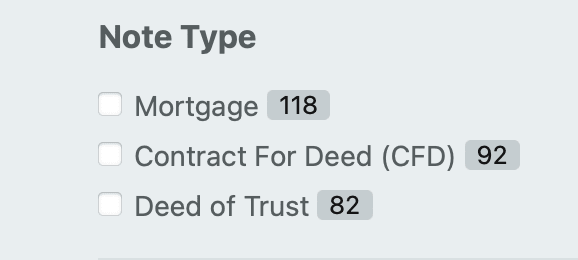
Filter Your Search By Security Instrument on Paperstac

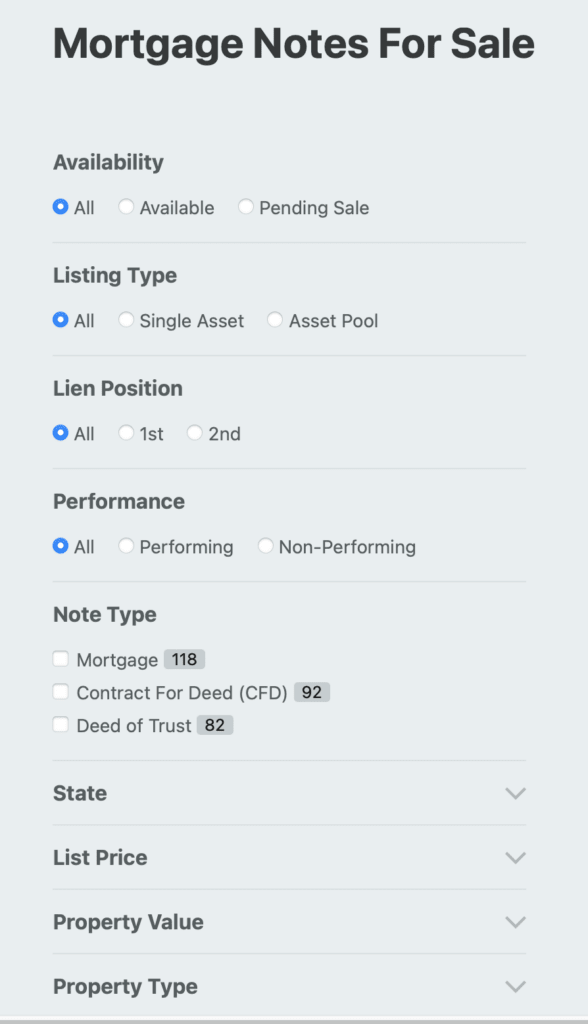
On the Paperstac platform when looking at notes for sale you can filter your search by security instrument and choose between Deed of Trust, Mortgage, and Contract For Deed.
Take a peek at our note inventory on the Paperstac platform: https://paperstac.com/for-sale.
For more education on mortgage note and real estate investing check out our Intro to Note Investing YouTube Series as well as our Paperstac Podcast, Mortgage Note Investing Weekly.
Bottom Line Between Deed of Trust vs. Mortgage
In conclusion, for real estate investors and note investors, it is crucial to understand the differences between a deed of trust and a mortgage. Although they possess distinct characteristics, both serve the common purpose of facilitating property acquisition while providing lenders with a sense of security and level of assurance.
Regardless of the specific variations, both agreements establish that in the event of borrower default on loan payments, the lender maintains the right to initiate foreclosure proceedings to recoup their investment. Recognizing and comprehending these nuances is paramount for successfully navigating the intricacies of real estate investing.
Thanks For Reading
Thanks for reading this blog post. We hope you enjoyed learning about the differences between a deed of trust and mortgage. Stay tuned for more helpful content on real estate investing and mortgage note investing on the Paperstac Blog!
For any blog content requests related to mortgage note investing or collaboration inquiries contact jessica@paperstac.com.
Paperstac
To gain a deeper understanding of our platform, its features, and the incredible team behind it, and to explore how it can benefit you, we invite you to visit our website.
For more information about us, please visit: https://paperstac.com/about.
Share This Article
Don’t forget to share this article on your favorite social media platforms and with others you feel can benefit from it.