
Ideas for a better investment
What Is The Difference Between A Mortgage And A Note?
What's the difference between a mortgage and a note? A mortgage note is a written agreement outlining the specifics of a mortgage loan, basically an an “IOU,” whereas a mortgage is a loan that secures the property against the loan in the event that the borrower defaults.

10 min read
Knowing the difference between a mortgage and a note can be confusing if you are new to the real estate industry. When you buy a house, you’ll have to sign both of these documents. And while both papers are important and designed to ensure that the lender is paid, there are some significant variations between them.

With that in mind, let’s take a closer look at each of these instruments individually. Defining what they are, how they work, and how they differ. With this understanding, you should be able to recognize the importance of each of these documents in a real estate transaction.
Read on to better distinguish the difference between a mortgage and a note.
Difference Between Mortgage And Note
What is the difference between a mortgage and a note? A mortgage note is a written agreement outlining the specifics of a mortgage loan. Whereas a mortgage, is a loan backed by actual property. A mortgage note, also known as a promissory note, is the document that is generated and signed at the time of closing.
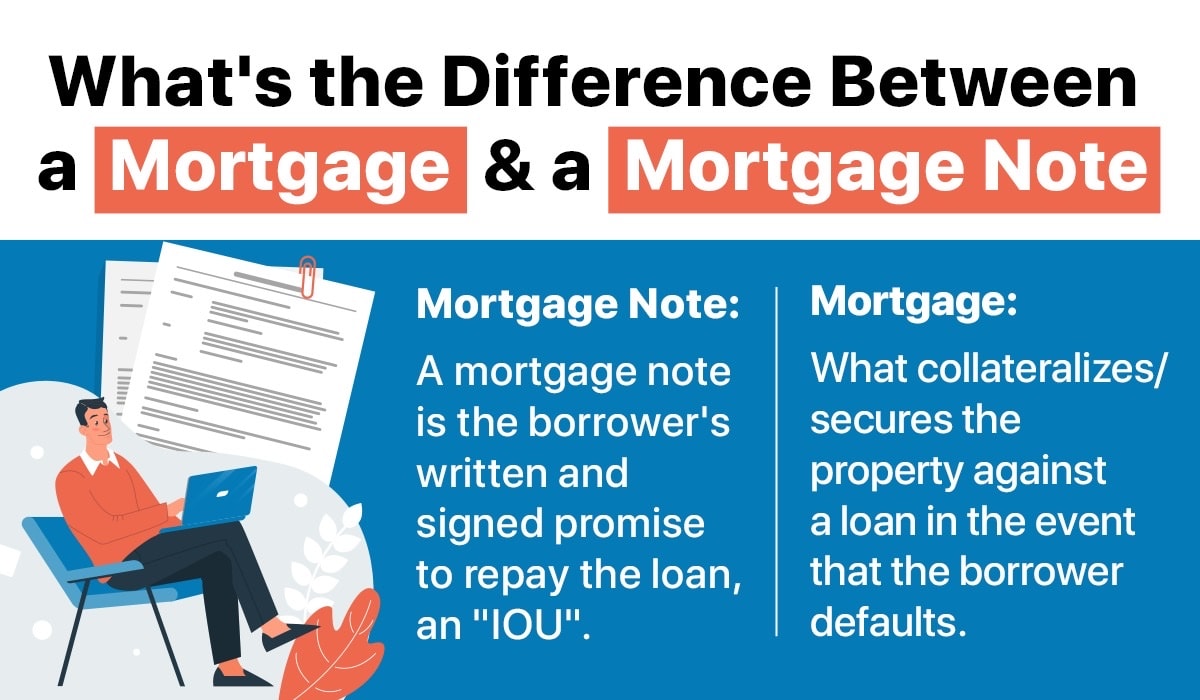 Difference between a mortgage and a mortgage note.
What Is A Mortgage Note?
What is a mortgage note? A mortgage note is separate from a mortgage. The mortgage note, also known as a promissory note or real estate note is the borrower’s written and signed promise to repay the loan. In other words, with a mortgage note you agree to make periodic payments to repay the amount you’ve borrowed. Put simply, a mortgage note is an “IOU”. It’s worth noting that, while a promissory note isn’t listed in the county land records like a mortgage, it’s still a legally binding document.
 A mortgage note is a written agreement outlining the specifics of a mortgage loan, basically an IOU.
What Does A Mortgage Note Look Like?
According to the Consumer Finance Protection Bureau, mortgage notes include the principal or amount owed. As well as, the interest rate of the mortgage loan, the payment due dates, the length of time for repayment or duration of the loan. And where to transfer payments. A section of the note also discusses what will happen if the terms of the note aren’t followed.
What kind of information does a mortgage note contain?
Answer: The mortgage note provides details regarding the terms of the loan agreement between the borrower and lender including:
Terms of the loan:
- The borrowing amount
- Duration of loan (number of years)
- Interest rate of the loan (fixed or adjustable)
- Payment due dates & frequency of the payments
- Late fees and other penalties, including right to foreclose
So, within the note, you’re going to find details like the payment amount, the interest rate, the penalty for late payment, and information on what happens if they stop paying? In addition, to the maturity date.
 What does a mortgage note include?
All of these terms are likely to appear on a real estate note. They’re all there to protect both the payor and the payee throughout the span or life of the loan.
The lender marks the promissory note as “paid in full” and returns it to you if you make all of the required payments and pay off the debt entirely, which usually takes years. If you don’t make the payments, the lender can still collect the money by foreclosing on your house using the mortgage.
What Is A Mortgage?

A mortgage, on the other hand, is what secures or collateralizes the property against a loan when buying a home, land, or other piece of real estate. Allowing a borrower to finance their home. As well as, provides security for the debt specified in the promissory note in the event a borrower defaults.
This does happen on occasion. The lender may seize and sell the property asset to make up for the loss. In other words, the mortgage allows the lender to sell your home through a process called “foreclosure”. In general, asset collateralization provides a sufficient level of protection against default risk for lenders.
What kind of information does a mortgage contain?
- Borrower’s names
- Property’s address
- Legal description of the property
It is also important to note; when buying a loan, make sure you have the original note with you. Occasionally, they are destroyed, and a lost note affidavit can be found instead.

This is acceptable as long as there’s a copy of the note. But, you should attempt to make sure you have the original wet ink promissory note whenever you buy the collateral because it proves you own the loan. For instance, who would be entitled to the money on a check that was endorsed to blank? Basically, whoever has the check in their possession.
How To Obtain A Copy of Your Mortgage Note
You can request a new copy of the note from your lender, the registry of deeds, the county recorder’s office or your mortgage broker (if you worked with one).
 How to get a copy of your mortgage note?
What Is Mortgage Note Investing?
Mortgage note investing involves purchasing real estate mortgage notes, which is essentially buying debt. This type of investment is considered an alternate asset class within active real estate investing and can provide investors with higher-than-average returns. Particularly, when notes are purchased at a discount. In essence, note investors fill the role of the bank, buying the debt and secured interest in the property rather than the property itself. By investing in mortgage notes, investors can diversify their portfolio and potentially earn a passive income stream from regular payments or a lump sum from non-performing notes.
 Real Estate Note Investing Is Essentially Investing In Debt.
Performing Vs. Non Performing Notes
What are performing and non-performing notes?
In simple terms, the note is performing when the borrower is current or on time with payments. Performing notes are an excellent way to diversify your portfolio while also generating passive income at a low risk.
When the borrower is 90 days or more behind on payments, or in default, the note is considered non-performing.
Investing in performing notes is an excellent way to get started with mortgage note investing. While non-performing notes require a little more experience and risk, they can be purchased at a discount and be very profitable.

Why Invest in Mortgage Notes?
Investing in mortgage notes is a compelling opportunity for investors looking to earn attractive returns without the hassle of managing rental properties. By purchasing real estate notes, investors can diversify their portfolios, earn passive income from performing notes, or purchase non-performing notes at a discount. Investing in notes is also an excellent way to grow self-directed IRAs or 401(k)s. Compared to physical real estate, notes are more liquid, and note investing is accessible to all investors, not just accredited ones.
Furthermore, investing in real estate notes offers several benefits, making it an attractive investment option for many investors. Note investing can be relatively easy to manage and provides investors with versatility when it comes to exit strategies. Unlike stocks, note investments are secured by real estate and are unaffected by the day-to-day volatility of the stock market, making them a reliable investment option. Investing in notes also offers a larger, and sometimes quicker, return than other types of investments and is an excellent way to diversify your portfolio without having to deal with rental property management.
In addition, note investing provides an opportunity for socially responsible investing, and investors can purchase notes at a discount, adding to the potential for higher yields. Note investing is also IRA-friendly, with a rollover option, providing investors with additional flexibility. Overall, investing in real estate notes is an excellent way to earn passive income, diversify your portfolio, and earn attractive returns without having to manage rental properties.
Advantages of Investing In Real Estate Notes
- Can be relatively easy to manage compared to managing physical real estate property.
- Offers versatility with exit strategies including selling the note, modifying the terms, or foreclosing on the property.
- Real estate notes are secured by real estate, which provides a higher level of security and makes them a less risky investment option.
- Is not affected by the day-to-day volatility of the stock market.
- Offers potentially higher returns than other types of investments, such as stocks or bonds.
- Is a great way to diversify your portfolio.
- Doesn’t require any rental property management or maintenance, reducing the associated headaches and costs.
- Provides an opportunity to earn passive income through regular payments from performing notes. Or the potential to earn a larger lump sum of income from non-performing notes, which can be purchased at a discount
- Offers high yield returns.
- Can be an excellent investment option for those with self-directed IRAs, offering tax-advantaged growth potential.
- Provides an opportunity for socially responsible investing.
- Mortgage Notes can be purchased at a discount, providing an opportunity for potentially higher returns.

Reasons why mortgage notes are appealing to investors.
Where To Buy Notes
We may be a little biased, but we recommend buying notes on Paperstac. Whether you are just starting out in note investing or you are a more seasoned or experienced note investor; it is a great option for investors wanting to buy and sell notes. To put it another way, we’ve got your back! Paperstac makes buying notes easier, faster, more convenient, and more secure thanks to our innovative online technology platform that streamlines the entire process and guides you through each step. Which is why investors view Paperstac as a technology company creating the future of mortgage note investing.

Where else can you buy mortgage notes?
There are several options available to you for buying mortgage notes. Banks, hedge funds, private sellers, Facebook groups, brokers, bankruptcy attorneys, private lending portals like the Garnaco Private Lending Program, and note exchanges or mortgage note trading platforms such as Paperstac are all potential sources for buying notes.
Note funds are an option for investors who want to invest in mortgage notes but prefer a more hands-off approach. These funds are managed by industry experts who handle the purchasing and management of the notes on behalf of investors. However, it’s important to note that every fund is different and the fees charged by fund managers can vary significantly from one fund to another.
Learn More About Where To Find & Purchase Mortgage Notes In This Intro To Note Investing Video
Mortgage vs. Note
Learn more about the similarities and differences between a mortgage and a mortgage note.
Similarities Between a Note And Mortgage
- Both signify an agreement between two parties.
- Both of these documents are legally binding.
- If the borrower does not repay the amount they are borrowing, the lender can sue the borrower under the mortgage document or the note.
Difference Between A Note and Mortgage
- The real estate note contains your promise to repay the loan. Whereas, the mortgage describes what happens if you fail to keep that promise
- A mortgage is normally registered in a recording office. Whereas a note is not typically registered.
- A promissory note specifies the terms of borrowing money, and you agree to them by signing it. While, the mortgage is a legal arrangement that spells out what will happen if you don’t pay your loan back according to the terms outlined in the promissory note.
To summarize, the mortgage note serves as an “IOU,” and the mortgage serves to secure or collateralize the property against the loan in the event that the borrower defaults.
Bottom Line
Despite the fact that these two papers go hand in hand, the mortgage note and mortgage definitions and purposes differ. With that in mind, this article should have taught you the distinctions between a mortgage note vs. mortgage. With this understanding, you should be able to distinguish the difference between the two and know what you can accomplish with each.
More Educational Resources
For more on mortgage note investing, check out our Intro to Note Investing YouTube Series as well as our Paperstac Podcast. We also have Paperstac Academy, the ultimate note investing course.
Be sure to connect with us on social media. You can follow our CEO, Richard Allen on LinkedIn for more on mortgage notes and real estate investing!
Recent Blog Posts

Catch Up On Recent Paperstac Podcast Episodes